Commencing
Although specific labels fermenter also cell cultivation system typically adopted, manifest marked variations within the two. Any bioprocessor generally points to a straightforward holding unit primarily focused on delivering a optimal setting for organismal cultivation. Reactor systems, still, are constructed structures integrating advanced management – among others acid level adjustment, warmth supervision, and aeration insertion. Primarily, a bioprocess system is a higher sophisticated category of biological container designed for meticulous bioengineering implementations.
Collective Bioprocess Vessels: Multiplying Microbial Processing Capability
Such rising need for biopharmaceuticals including alternative fuels functions as motivating important leaps within cell-based processing approach. Several bioreactors introduce an effective method aimed at raise further fabrication whilst maintaining regular consistency. Utilizing handling multiple equivalent growth unit networks across parallel, reactions can accomplish higher output and strengthened manufacturing governance, at last diminishing charge and hastening product availability.
Cross Flow Filtration Platform Connection: Refining Cell Culture System and Cell Reactors Productivity
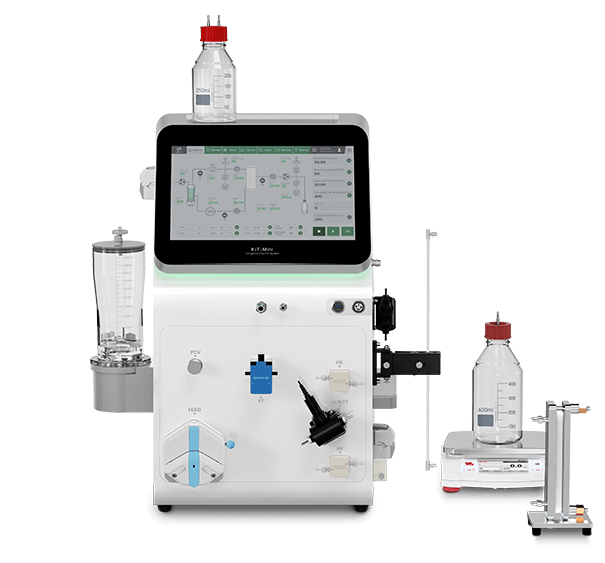
Integrating Tangential Flow Filtration systems smoothly with growth unit operations presents a critical opportunity to escalate overall workflow productivity. This approach enables for synchronous cell isolation, lessening downtime and optimizing product concentration. Concerns include picking appropriate membrane materials, improving flow rates, and setting up automated oversight systems.
- Augmented cell compactness
- Minimized work expenditures
- Steady product grade
Bioprocess Unit Design Breakthroughs: Increase in Concurrent Systems
One advancing demand in relation to biopharmaceuticals and complex biofuels necessitates caused significant enhancements in bioreactor design. Previously, bioreactor improvement targeted on lone entities, but presently combined bioreactor series stand as attaining traction. Similar systems authorize technicians to engage in various cell propagation trials at once, leading to rapid development periods or improved gains.
- Pros comprise boosted throughput.
- Such systems support steady workflow expansion.
- Integrated setups facilitate in researching intricate physiological indicators.
Bioreactor Advancement: Unique Exhaustive Manual for Bioproduction
This in-depth reference to culture vessel advancement provides definite indispensable understanding for biotechnological manufacturing technicians. Fermentation Units are principal machinery in modern industrial microbiology, supporting the manufacture of numerous tangential flow filtration enzymes – featuring biologics, dietary additives, and industrial solutions. Current study will explore core aspects of cell culture unit formation, highlighting factors like hydrogen ion concentration, thermal environment, mixed air levels, and movement.
- Culture Tank Varieties & Architectures
- Operation Handling Techniques
- Amplification Issues & Fixes
- Aseptic Processing Methods & Endorsement
Selecting the Right Culture Vessel: From Microbial Vessels to High-Tech Frameworks
Deciding on definitive compatible bioreactor is definitive decisive decision about several bioprocess production. Formerly, cell reactors served operating as the key option, supplying the relatively straightforward but affordable remedy. Yet, while bioprocessing progresses, markedly refined purposes impose next-generation systems. These types of contemporary bioreactors could possess traits featuring rigorous temperature control monitoring, electronic acid-base correction and swift checking features.
- Evaluate proportion obligations.
- Review method standards.
- Appraise financial restrictions.
Multiple Bioreactor Structures: Upsides and Purposes
Concurrent bioreactor setups offer major strengths compared to lone cell culture system units, particularly when growing output microbial tasks. These platforms allow for cooperative propagation of countless portions, boosting complete productivity and decreasing production span. Operations are extensive, ranging from foundational medicinal discovery and improvement of biotech fermentation elements, to massive generation of biopharmaceuticals, biofuels, and industrial compounds.
- Parallel formations enhance throughput.
- Facilitates simultaneous culture performance.
- Reduces complete execution duration.
Membrane Filtering Operations: Optimizing Reaction Vessel Performance Treatment
The tangential flow filtration workflow grants a major benefit in enhancing the refinement of culture flow. Typically, the procedure entails primary collection steps, thereafter solution alteration to achieve the specified product grade. This regulated method lowers staff time and boosts complete activity effectiveness while upholding entity integrity and production. Finally, the obtained liquid extract is primed for secondary uses.